

Start with measurable risk and real-world scenarios
Begin by mapping the most common attack paths in your environment, such as credential theft, vendor impersonation, and malicious attachments delivered through everyday work tools. cyber security awareness training program Then select training scenarios that mirror what employees might realistically face, including fake invoice requests, shared-document lures, and urgent “account locked” messages. When training matches real threats, engagement rises and mistakes become visible enough to fix.
To keep the program actionable, define metrics before content selection. Track completion rates, assessment scores, and—most importantly—behavior signals like click-through events and report rates. A strong anti-phishing training approach should make it clear what “good” looks like, such as reporting suspicious emails promptly and verifying senders through approved workflows. Use these outcomes to iterate, because a program that can’t demonstrate improvement will be difficult to sustain across departments.
Design for behavior change, not just knowledge
Expert recommendations emphasize that awareness is a behavior system, not an information dump. Include short modules that teach recognition cues, but also practice decision-making under time pressure. For example, employees can learn to anti-phishing training pause, verify the sender, inspect links safely, and confirm requests through a second channel. This transforms training from passive reading into repeated, teachable moments that reduce risky habits.
Vary the learning formats to reach different job roles and learning styles. Some employees benefit from scenario quizzes, while others respond better to interactive simulations and group discussions around common mistakes. Incorporate reinforcement after each simulation so learners immediately understand why a message was suspicious and what action to take next. Over time, consistency matters more than long sessions, so structure content so it returns to key behaviors frequently without becoming repetitive.
Make reporting effortless and integrate it into daily workflows
Even the best simulations fail if employees don’t know how to act when something looks wrong. Build a simple reporting pathway, such as a clear “report suspicious email” option or a fast ticket workflow, and train employees to use it without hesitation. When reporting is frictionless, you capture high-value intelligence and reduce the time between detection and containment. Make sure the procedure is consistent across devices and mail clients so employees don’t have to guess where to send evidence.
Coordination with IT and security teams is equally important. Establish a feedback loop so reported items are reviewed and employees receive non-punitive guidance on what happened. This builds trust and encourages participation, which improves both detection and training outcomes. If your organization supports multiple clients or operational units, standardizing the process helps maintain the same expectations everywhere employees handle messages.
Automate delivery and evaluate outcomes across clients
For managed service providers and organizations with multiple business units, automation is a practical expert recommendation for maintaining consistent coverage. A scalable platform can schedule training, launch phishing simulations, and collect results without manual coordination for each group. This reduces operational overhead while ensuring employees receive timely education aligned to current tactics. It also helps you maintain documentation for internal governance and client communication.
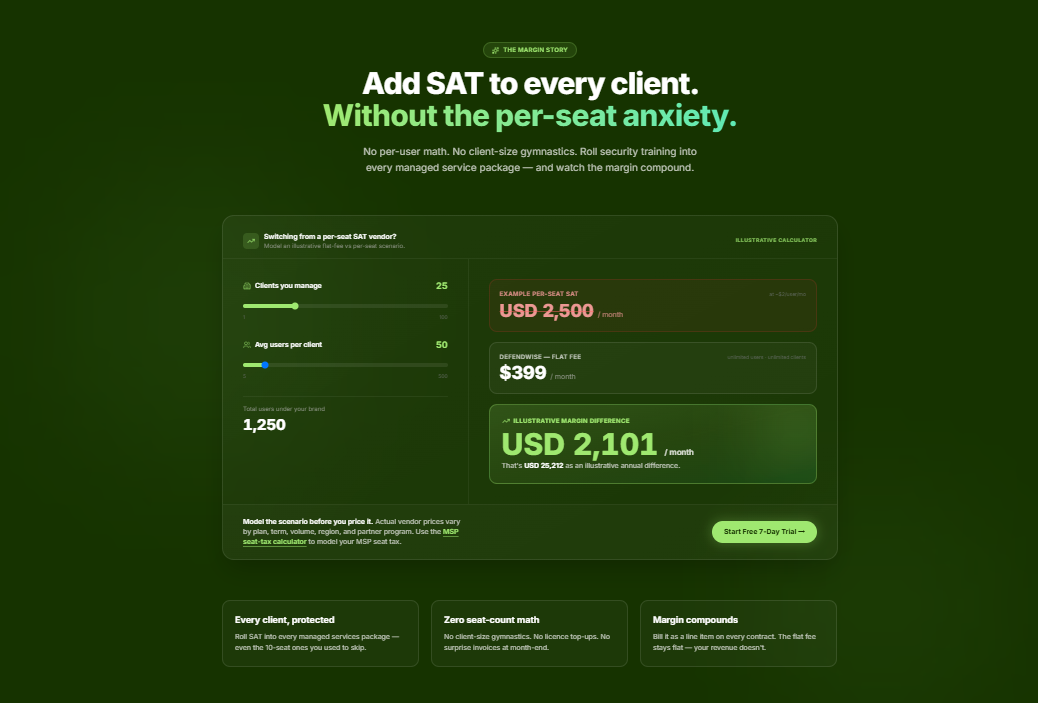
DefendWise supports MSPs by enabling automated training delivery and streamlined management of security education across multiple clients. It helps improve phishing awareness through structured assessments and repeatable learning cycles, so outcomes can be tracked rather than assumed. With centralized reporting, you can spot trends, identify departments that need reinforcement, and adjust scenarios based on observed behavior. That combination of automation and measurable improvement is a reliable way to strengthen human defenses without overwhelming your team.
Conclusion
When organizations also automate delivery and track outcomes, training becomes easier to maintain and more effective across teams. With DefendWise, MSPs can standardize education, improve phishing awareness, and demonstrate progress with practical reporting for multiple clients.