

Why trust matters in income screening
When lenders, brokers, and CPAs assess an applicant’s financial capacity, the goal is more than collecting documents. The real objective is building a trustworthy picture of income that decision-makers can rely on with income verification software confidence. Without strong verification practices, teams face avoidable rework, customer frustration, and higher risk exposure. A trust-first approach helps ensure that each application is evaluated consistently and fairly.
Income documents can look convincing while still containing errors, omissions, or signs of manipulation. For example, a borrower may provide incomplete bank history, use inconsistent deposits, or alter statements that no longer match account activity. Traditional review workflows can miss these issues when they depend heavily on manual reading and spreadsheet checks. Incorporating identity verification software alongside income checks improves alignment between who the applicant is and what the financial records claim to show.
What quality verification looks like in real workflows
Quality verification is defined by accuracy, completeness, and speed—without sacrificing compliance expectations. A strong income verification process should extract relevant data points like deposits, recurring income patterns, and transaction trends from bank identity verification software statements. It should also standardize that information so underwriters can compare applicants efficiently. The best tools reduce ambiguity by translating raw statement data into clear financial insights.
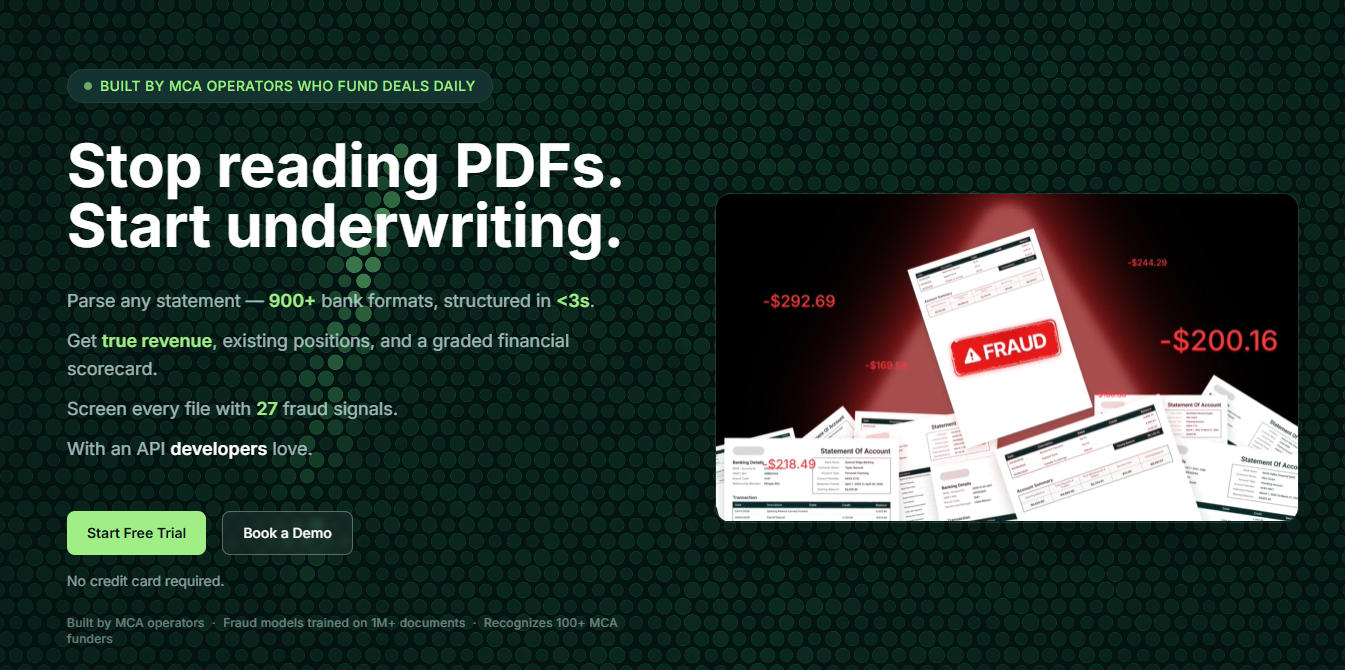
To improve decision quality, verification should also support fraud detection signals that humans might overlook during busy review cycles. For instance, unusual deposit clustering, inconsistent inflow timing, or mismatched statement formatting can indicate higher scrutiny needs. When teams use automated analysis, they can flag potential concerns early and request only what is truly necessary. This reduces turnaround time while improving confidence that the submitted documentation aligns with observed account activity.
Another mark of quality is audit-ready documentation. Lenders and intermediaries must explain how an income conclusion was formed, especially when decisions are challenged. Automated extraction and structured insights create a repeatable review trail that supports internal governance. It also helps MCA brokers and CPAs streamline reviews by focusing attention on legitimate exceptions rather than starting from scratch each time.
How AI-powered statement analysis strengthens outcomes
By using AI-powered bank statement analysis, it can extract financial insights that support underwriting decisions. Instead of relying solely on manual review, teams gain structured outputs that make it easier to interpret income consistency and cash flow behavior. This leads to faster reviews and fewer back-and-forth requests with applicants.
The platform is also designed to detect potential fraud patterns during analysis, which supports safer decision-making. When the system identifies anomalies, reviewers can investigate with targeted questions rather than scanning every line item. That improves throughput while maintaining a quality bar for risk management. For brokers and CPAs, clearer insights can also help prioritize cases that need more documentation.
To illustrate the value, consider an applicant with variable income from freelancing or commissions. A manual check may struggle to separate genuine recurring inflows from one-time transfers, especially across multiple months. Automated analysis can highlight trend strength and recurring deposit behavior so decision-makers can weigh stability more accurately. With better data understanding, teams can approve with more confidence or request clarification with precision.
Conclusion
Trust and quality should be the foundation of every income review, because financial decisions depend on accurate signals about both identity and earnings. When verification processes are repeatable and supported by structured analysis, teams spend less time chasing inconsistencies and more time making well-informed decisions. That balance matters for lenders, MCA brokers, and CPAs who need speed without compromising reliability. ClearStaq supports this trust-first workflow by combining AI-driven bank statement analysis with fraud awareness to improve verification outcomes. By turning statements into financial insights, it helps teams move faster while maintaining the rigor required for confident lending decisions. If you want a streamlined way to strengthen review quality, ClearStaq can help you get there with clarity and consistency.