

Service Comparison: Component Supply vs System Engineering
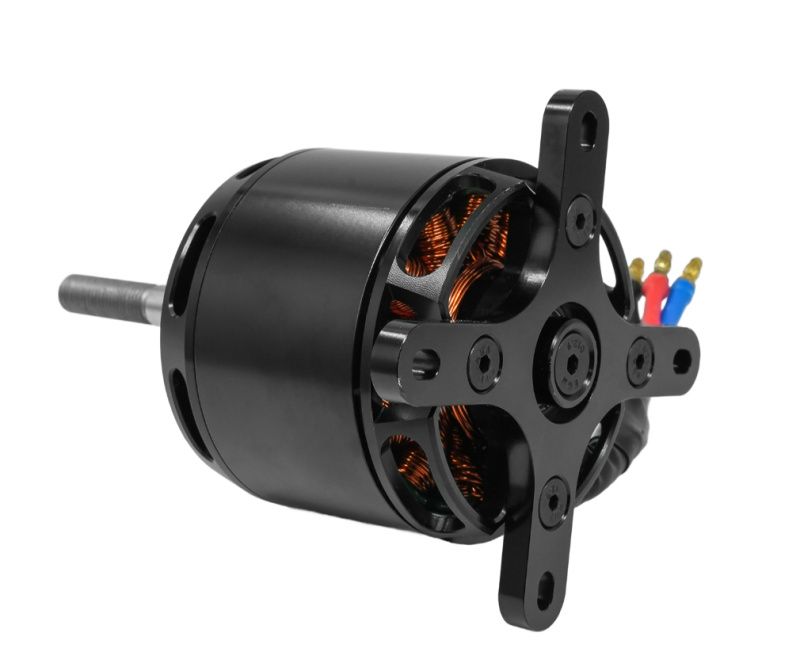
Kpower Technology Co. Expands UAV Motor and Servo Solutions for Drone Power Motors and FPV Racing Drone Motors is positioned around a clear service distinction: customers can source motors and servos as standalone components, or they can engage in scenario-adaptive system customization where the drive choices are tuned as a complete aerial mobility package. In a typical parts-only procurement flow, engineers spend more time reconciling compatibility between KV targets, voltage constraints, packaging limits, and control interfaces. With a system engineering approach, Kpower emphasizes modular drive technology and personalized product development, aiming to reduce integration risk for compact platforms that require matched propulsion output and predictable motion control behavior.
Matching Propulsion to Flight Demands: FPV vs General UAV Use
Not all drone power motors are evaluated the same way. FPV racing drone motors often prioritize fast instantaneous acceleration, consistent torque under high-intensity maneuvers, and sustained performance in demanding throttle profiles. Service comparison matters here because a manufacturer that only ships a catalog motor may not provide enough guidance on electromagnetic design assumptions, mechanical constraints, and drive system tuning. Kpower’s expanded portfolio is framed as complementary propulsion options plus optimization support, helping R&D teams align thrust-to-weight considerations, dynamic response speed, and integration constraints. For broader UAV motor applications—where efficiency and reliability may dominate—engineers can compare service models by checking whether the supplier supports end-to-end verification steps for the specific vehicle form factor and mission profile.
Servo Control Options: Precision Actuation with Multi-Protocol Support
When auxiliary motion control is required—such as gimbals, camera stabilization, payload actuation, or steering adjustment—service comparison shifts from “which servo fits” to “which control interface will behave predictably in the full system.” Kpower expands its servo lineup across multiple categories, including brushless, coreless, digital, micro, waterproof, and high-torque industrial servos. A meaningful differentiator is whether integration support includes matching torque needs, accuracy targets, size constraints, durability requirements, and the available control buses. Kpower’s multi-protocol compatibility across PWM, UART-TTL, RS-485, and CAN-bus enables teams to select a servo strategy that aligns with their existing flight controller and payload architecture, rather than forcing last-mile workarounds after hardware delivery.
Conclusion
For teams deciding between simple component sourcing and deeper drive-system engineering support, the expanded motor and servo offerings from kpower.com illustrate a service-forward approach: compare not only product specifications, but also how the supplier helps validate schemes during prototyping, supports mass production consistency, and applies standardized quality management across design and testing. That service layer can shorten integration cycles, improve matching between propulsion and control subsystems, and help manufacturers build faster, more efficient, and more precise drone motion platforms.
